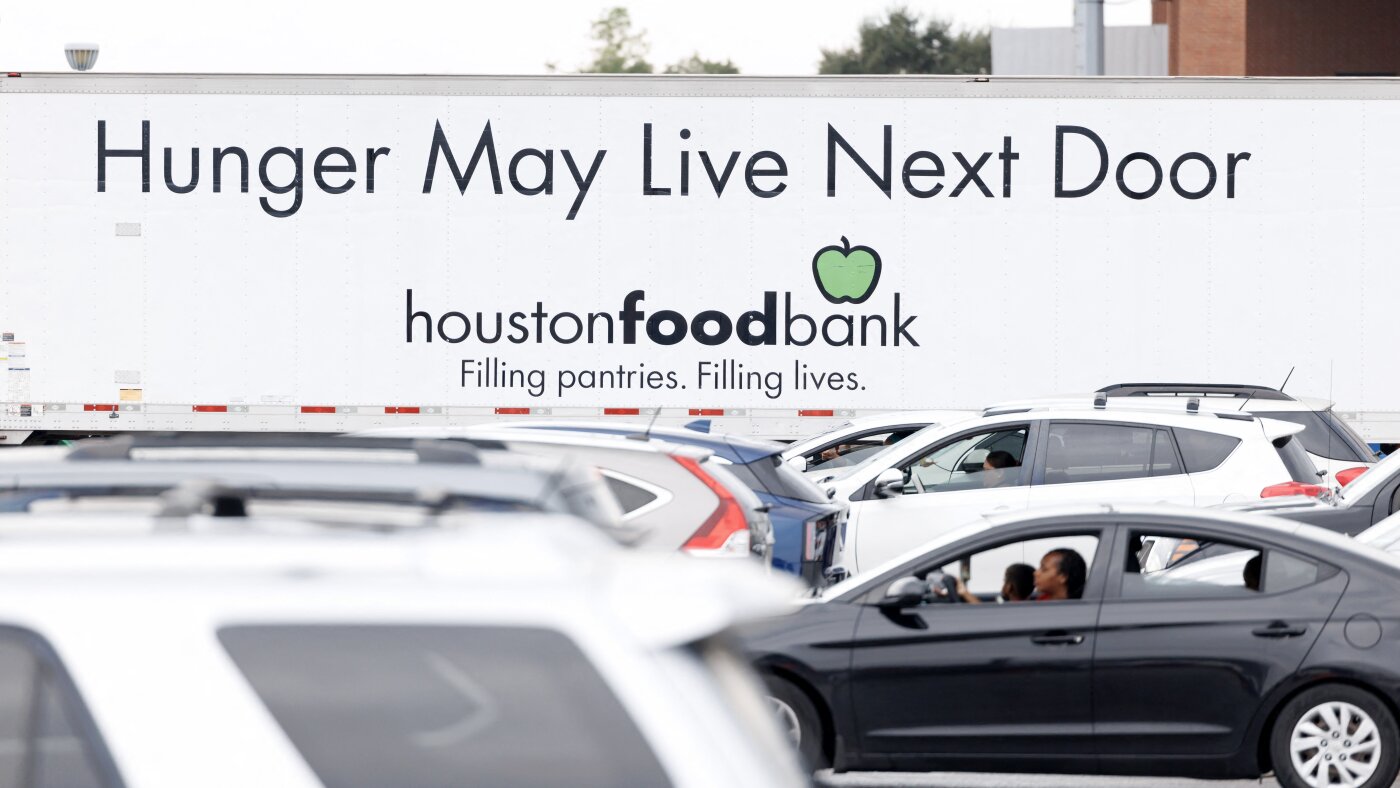
Food Insecurity Surges - reflects ongoing Wall Street developments and broader market sentiment shifts. A new survey from the Federal Reserve Bank of New York indicates that more American families are experiencing food insecurity now than during the height of the COVID-19 pandemic. The finding suggests persistent economic strain among low-income households, even as broader economic indicators show recovery.
Live News
Food Insecurity Surges - reflects ongoing Wall Street developments and broader market sentiment shifts. The use of predictive models has become common in trading strategies. While they are not foolproof, combining statistical forecasts with real-time data often improves decision-making accuracy. According to a recently released survey by the Federal Reserve Bank of New York, the share of households reporting food insecurity has risen above the level observed at the peak of the coronavirus pandemic. The survey measures households’ ability to afford enough food, and the latest data point to a deteriorating situation for many families. While the exact figures from the survey were not specified in the report, the trend signals that the economic aftershocks of the pandemic—including elevated inflation, rising interest rates, and the end of emergency food assistance programs—may be taking a toll on household budgets. The survey is part of the New York Fed’s ongoing efforts to track consumer well-being and financial stability. The report comes against a backdrop of mixed economic data: job growth remains resilient, but consumer sentiment has been sluggish and savings buffers have dwindled for lower-income groups. Food insecurity is often considered a lagging indicator of financial stress, and the latest reading suggests that the cost-of-living crisis may be deepening for vulnerable populations.
Food Insecurity in US Exceeds Pandemic Levels, New York Fed Survey Shows Access to multiple perspectives can help refine investment strategies. Traders who consult different data sources often avoid relying on a single signal, reducing the risk of following false trends.Many investors now incorporate global news and macroeconomic indicators into their market analysis. Events affecting energy, metals, or agriculture can influence equities indirectly, making comprehensive awareness critical.Food Insecurity in US Exceeds Pandemic Levels, New York Fed Survey Shows Real-time updates allow for rapid adjustments in trading strategies. Investors can reallocate capital, hedge positions, or take profits quickly when unexpected market movements occur.Combining technical analysis with market data provides a multi-dimensional view. Some traders use trend lines, moving averages, and volume alongside commodity and currency indicators to validate potential trade setups.
Key Highlights
Food Insecurity Surges - reflects ongoing Wall Street developments and broader market sentiment shifts. Market participants increasingly appreciate the value of structured visualization. Graphs, heatmaps, and dashboards make it easier to identify trends, correlations, and anomalies in complex datasets. Key takeaways from the New York Fed survey include the widening gap between headline economic growth and the lived experience of many households. While inflation has moderated from its 2022 peak, food prices remain elevated, and the cumulative impact of higher costs appears to be pushing more families into food hardship. The survey also highlights a potential shift in consumer behavior: as households prioritize necessities, discretionary spending may face further headwinds. This dynamic could weigh on sectors such as retail, restaurants, and entertainment, which rely on consumer confidence and disposable income. From a policy perspective, the data may renew debate about the need for targeted assistance programs. The expiration of expanded SNAP benefits and other pandemic-era safety nets could be contributing to the rise in food insecurity. The Federal Reserve’s interest rate policy also plays a role, as higher borrowing costs can squeeze household budgets indirectly.
Food Insecurity in US Exceeds Pandemic Levels, New York Fed Survey Shows The integration of AI-driven insights has started to complement human decision-making. While automated models can process large volumes of data, traders still rely on judgment to evaluate context and nuance.Investors often experiment with different analytical methods before finding the approach that suits them best. What works for one trader may not work for another, highlighting the importance of personalization in strategy design.Food Insecurity in US Exceeds Pandemic Levels, New York Fed Survey Shows Cross-market monitoring is particularly valuable during periods of high volatility. Traders can observe how changes in one sector might impact another, allowing for more proactive risk management.Some traders focus on short-term price movements, while others adopt long-term perspectives. Both approaches can benefit from real-time data, but their interpretation and application differ significantly.
Expert Insights
Food Insecurity Surges - reflects ongoing Wall Street developments and broader market sentiment shifts. Tracking global futures alongside local equities offers insight into broader market sentiment. Futures often react faster to macroeconomic developments, providing early signals for equity investors. For investors, the rise in food insecurity may offer clues about the broader economic trajectory. While the overall economy has proven resilient, the survey suggests that lower-income households are under renewed pressure, which could eventually ripple into consumer credit and savings metrics. Sectors tied to basic necessities—such as discount retailers, packaged food companies, and agricultural commodities—could see sustained demand from cost-conscious consumers. However, any further deterioration in household financial health might pose risks to sectors that depend on robust consumer spending. The survey serves as a reminder that recovery from the pandemic remains uneven. Policymakers and market participants may need to monitor these trends closely, as persistent food insecurity could signal deeper structural challenges in the labor market and social safety net. The situation warrants continued observation rather than immediate conclusions about the direction of the economy. Disclaimer: This analysis is for informational purposes only and does not constitute investment advice.
Food Insecurity in US Exceeds Pandemic Levels, New York Fed Survey Shows Analytical platforms increasingly offer customization options. Investors can filter data, set alerts, and create dashboards that align with their strategy and risk appetite.Observing correlations between markets can reveal hidden opportunities. For example, energy price shifts may precede changes in industrial equities, providing actionable insight.Food Insecurity in US Exceeds Pandemic Levels, New York Fed Survey Shows Real-time data enables better timing for trades. Whether entering or exiting a position, having immediate information can reduce slippage and improve overall performance.Some traders combine sentiment analysis from social media with traditional metrics. While unconventional, this approach can highlight emerging trends before they appear in official data.