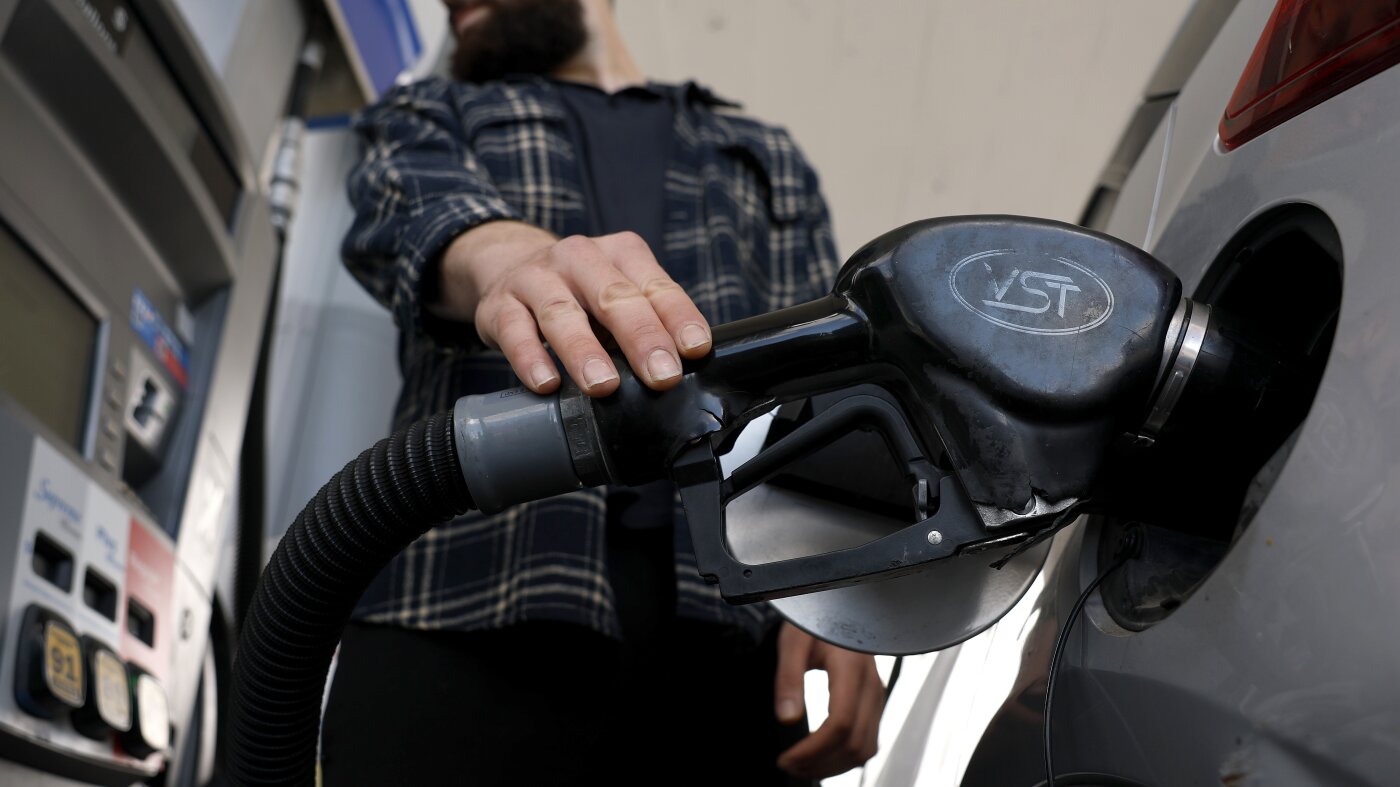
reference data Our platform delivers equity research covering earnings momentum, market sentiment, and technical trading signals. With the national average for a gallon of gasoline reaching $4.55 as the U.S. enters one of the busiest travel weekends of the year, consumers are seeking effective ways to reduce fuel costs. Options range from adjusting driving habits to considering electric vehicles or simply reducing travel, reflecting a broad search for savings amid elevated pump prices.
Live News
reference data Monitoring global indices can help identify shifts in overall sentiment. These changes often influence individual stocks. Many investors underestimate the importance of monitoring multiple timeframes simultaneously. Short-term price movements can often conflict with longer-term trends, and understanding the interplay between them is critical for making informed decisions. Combining real-time updates with historical analysis allows traders to identify potential turning points before they become obvious to the broader market. The national average price for a gallon of regular gasoline stands at $4.55, according to the latest available data, as Americans prepare for the Memorial Day holiday travel period—traditionally one of the heaviest driving weekends. This price level represents a significant increase from prior years, prompting drivers to explore methods to cut fuel expenses. Common recommendations include reducing highway speed, as aerodynamic drag increases with speed and fuel efficiency typically declines above 50 miles per hour. Maintaining proper tire pressure, removing excess weight, and using cruise control on flat terrain can also contribute to modest gains in miles per gallon. For those with access to public transit or the ability to carpool, reducing total miles driven offers the most direct savings. Another option gaining attention is the shift toward electric vehicles (EVs). While upfront costs remain higher than conventional cars—and charging infrastructure varies by region—EVs can offer lower per-mile fuel costs, especially when charged at home during off-peak hours. For some households, avoiding non-essential trips entirely may be the most practical short-term measure, particularly if budgets are stretched by higher fuel prices. The driving tips and alternatives discussed in the original segment reflect a broad effort by consumers to adapt to elevated pump prices, though individual results may vary based on vehicle type, driving conditions, and local fuel costs.
Navigating High Gas Prices: Strategies for Cost Savings as National Average Hits $4.55 Observing market sentiment can provide valuable clues beyond the raw numbers. Social media, news headlines, and forum discussions often reflect what the majority of investors are thinking. By analyzing these qualitative inputs alongside quantitative data, traders can better anticipate sudden moves or shifts in momentum.While technical indicators are often used to generate trading signals, they are most effective when combined with contextual awareness. For instance, a breakout in a stock index may carry more weight if macroeconomic data supports the trend. Ignoring external factors can lead to misinterpretation of signals and unexpected outcomes.Navigating High Gas Prices: Strategies for Cost Savings as National Average Hits $4.55 Risk management is often overlooked by beginner investors who focus solely on potential gains. Understanding how much capital to allocate, setting stop-loss levels, and preparing for adverse scenarios are all essential practices that protect portfolios and allow for sustainable growth even in volatile conditions.Some investors rely heavily on automated tools and alerts to capture market opportunities. While technology can help speed up responses, human judgment remains necessary. Reviewing signals critically and considering broader market conditions helps prevent overreactions to minor fluctuations.
Key Highlights
reference data Historical patterns can be a powerful guide, but they are not infallible. Market conditions change over time due to policy shifts, technological advancements, and evolving investor behavior. Combining past data with real-time insights enables traders to adapt strategies without relying solely on outdated assumptions. Tracking related asset classes can reveal hidden relationships that impact overall performance. For example, movements in commodity prices may signal upcoming shifts in energy or industrial stocks. Monitoring these interdependencies can improve the accuracy of forecasts and support more informed decision-making. The key takeaway from the elevated gas price environment is the potential for a shift in consumer behavior, which could have downstream effects on the broader economy. Higher fuel costs may reduce discretionary spending in other areas, as households allocate more of their budgets to transportation. This pattern is often observed when gasoline prices spike around major travel holidays. For the automotive industry, sustained high prices could accelerate interest in fuel-efficient vehicles, hybrids, and EVs. Automakers that have been investing heavily in electrification may see increased attention from cost-conscious buyers, though adoption rates would also depend on charging infrastructure and vehicle availability. Conversely, demand for large, fuel-inefficient vehicles could soften in the near term. From an energy perspective, the $4.55 national average signals tight supply-demand dynamics in the oil market. Refinery capacity constraints, geopolitical tensions, and seasonal demand all contribute to the price level. While individual drivers cannot control global supply, their collective response to high prices—such as reducing miles traveled—could modestly affect overall gasoline consumption, potentially influencing future price trends.
Navigating High Gas Prices: Strategies for Cost Savings as National Average Hits $4.55 Diversifying the sources of information helps reduce bias and prevent overreliance on a single perspective. Investors who combine data from exchanges, news outlets, analyst reports, and social sentiment are often better positioned to make balanced decisions that account for both opportunities and risks.Understanding liquidity is crucial for timing trades effectively. Thinly traded markets can be more volatile and susceptible to large swings. Being aware of market depth, volume trends, and the behavior of large institutional players helps traders plan entries and exits more efficiently.Navigating High Gas Prices: Strategies for Cost Savings as National Average Hits $4.55 Many investors underestimate the psychological component of trading. Emotional reactions to gains and losses can cloud judgment, leading to impulsive decisions. Developing discipline, patience, and a systematic approach is often what separates consistently successful traders from the rest.Monitoring global market interconnections is increasingly important in today’s economy. Events in one country often ripple across continents, affecting indices, currencies, and commodities elsewhere. Understanding these linkages can help investors anticipate market reactions and adjust their strategies proactively.
Expert Insights
reference data Technical analysis can be enhanced by layering multiple indicators together. For example, combining moving averages with momentum oscillators often provides clearer signals than relying on a single tool. This approach can help confirm trends and reduce false signals in volatile markets. Investors who keep detailed records of past trades often gain an edge over those who do not. Reviewing successes and failures allows them to identify patterns in decision-making, understand what strategies work best under certain conditions, and refine their approach over time. The national average price for a gallon of regular gasoline stands at $4.55, according to the latest available data, as Americans prepare for the Memorial Day holiday travel period—traditionally one of the heaviest driving weekends. This price level represents a significant increase from prior years, prompting drivers to explore methods to cut fuel expenses. Common recommendations include reducing highway speed, as aerodynamic drag increases with speed and fuel efficiency typically declines above 50 miles per hour. Maintaining proper tire pressure, removing excess weight, and using cruise control on flat terrain can also contribute to modest gains in miles per gallon. For those with access to public transit or the ability to carpool, reducing total miles driven offers the most direct savings. Another option gaining attention is the shift toward electric vehicles (EVs). While upfront costs remain higher than conventional cars—and charging infrastructure varies by region—EVs can offer lower per-mile fuel costs, especially when charged at home during off-peak hours. For some households, avoiding non-essential trips entirely may be the most practical short-term measure, particularly if budgets are stretched by higher fuel prices. The driving tips and alternatives discussed in the original segment reflect a broad effort by consumers to adapt to elevated pump prices, though individual results may vary based on vehicle type, driving conditions, and local fuel costs.
The key takeaway from the elevated gas price environment is the potential for a shift in consumer behavior, which could have downstream effects on the broader economy. Higher fuel costs may reduce discretionary spending in other areas, as households allocate more of their budgets to transportation. This pattern is often observed when gasoline prices spike around major travel holidays. For the automotive industry, sustained high prices could accelerate interest in fuel-efficient vehicles, hybrids, and EVs. Automakers that have been investing heavily in electrification may see increased attention from cost-conscious buyers, though adoption rates would also depend on charging infrastructure and vehicle availability. Conversely, demand for large, fuel-inefficient vehicles could soften in the near term. From an energy perspective, the $4.55 national average signals tight supply-demand dynamics in the oil market. Refinery capacity constraints, geopolitical tensions, and seasonal demand all contribute to the price level. While individual drivers cannot control global supply, their collective response to high prices—such as reducing miles traveled—could modestly affect overall gasoline consumption, potentially influencing future price trends.
Navigating High Gas Prices: Strategies for Cost Savings as National Average Hits $4.55 The interplay between macroeconomic factors and market trends is a critical consideration. Changes in interest rates, inflation expectations, and fiscal policy can influence investor sentiment and create ripple effects across sectors. Staying informed about broader economic conditions supports more strategic planning.Real-time data is especially valuable during periods of heightened volatility. Rapid access to updates enables traders to respond to sudden price movements and avoid being caught off guard. Timely information can make the difference between capturing a profitable opportunity and missing it entirely.Navigating High Gas Prices: Strategies for Cost Savings as National Average Hits $4.55 Analyzing trading volume alongside price movements provides a deeper understanding of market behavior. High volume often validates trends, while low volume may signal weakness. Combining these insights helps traders distinguish between genuine shifts and temporary anomalies.Seasonality can play a role in market trends, as certain periods of the year often exhibit predictable behaviors. Recognizing these patterns allows investors to anticipate potential opportunities and avoid surprises, particularly in commodity and retail-related markets.