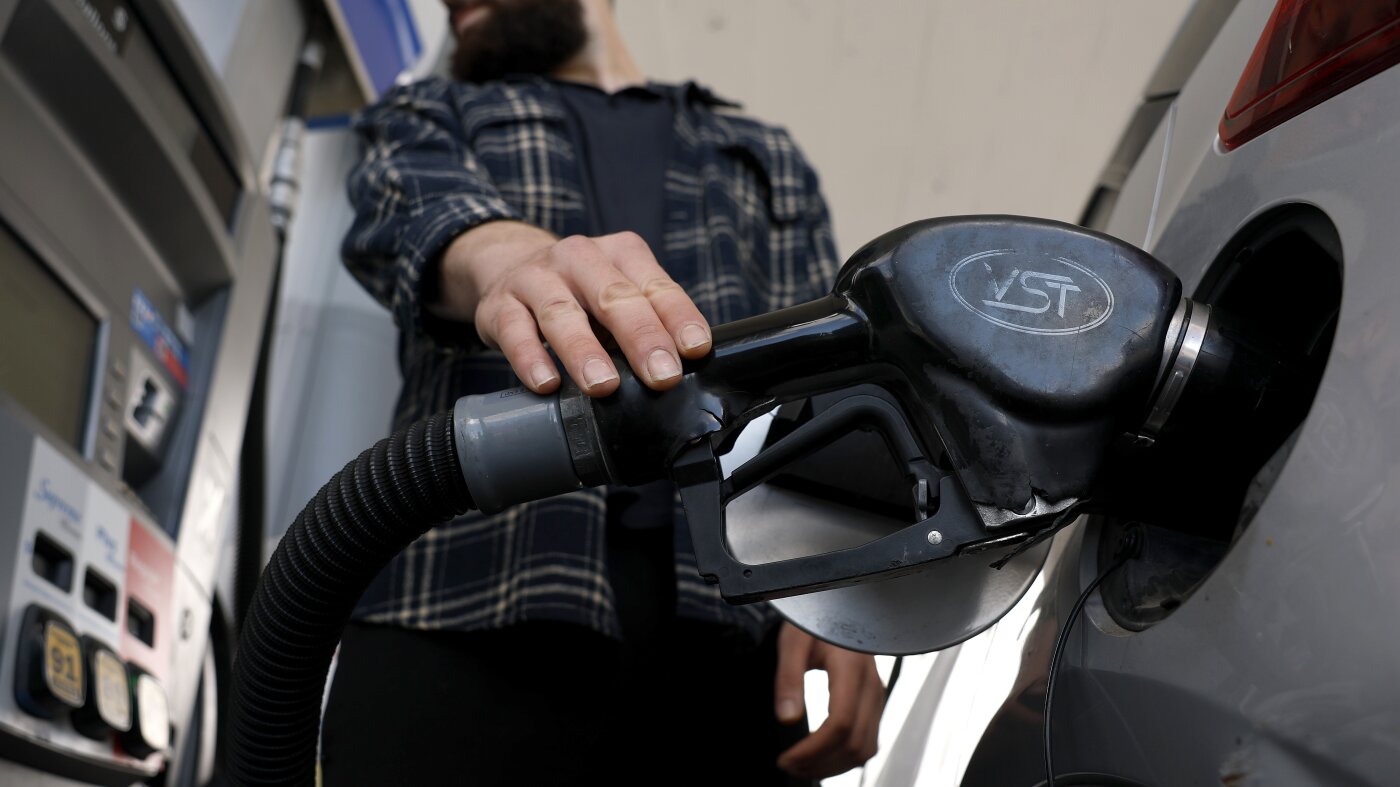
Soaring Gas Prices Prompt Consumer - institutional positioning, allocation, and portfolio rotation. With the U.S. national average for regular gasoline reaching $4.55 per gallon ahead of a major holiday travel weekend, consumers are exploring various methods to reduce fuel expenses. Options highlighted include adjusting driving habits, considering electric vehicle adoption, and reducing overall vehicle usage to curb spending.
Live News
Soaring Gas Prices Prompt Consumer - institutional positioning, allocation, and portfolio rotation. Some traders combine sentiment analysis from social media with traditional metrics. While unconventional, this approach can highlight emerging trends before they appear in official data. As the United States approaches one of its busiest travel periods, the national average price for a gallon of regular gasoline has recently reached $4.55, according to the latest available data. This elevated cost is prompting households to evaluate practical steps to manage their fuel budgets. Several approaches have been identified, each with different levels of potential savings and lifestyle adjustments. One commonly suggested method involves modifying driving behavior. Slowing down on highways, maintaining steady speeds, and avoiding rapid acceleration can improve fuel efficiency. The U.S. Department of Energy notes that aggressive driving can lower gas mileage by roughly 15–30% at highway speeds and 10–40% in stop-and-go traffic. Another path is the shift toward electric vehicles (EVs). While the upfront purchase price of an EV may be higher, the cost of electricity per mile is typically lower than gasoline. Additionally, some states and utilities offer incentives for EV adoption, though availability varies. For some, the most immediate solution is simply driving less. Options such as carpooling, using public transit, combining errands into fewer trips, or working from home when possible can significantly reduce fuel consumption. The choice depends on individual circumstances and local infrastructure.
Soaring Gas Prices Prompt Consumer Strategies for Cost Savings Historical trends often serve as a baseline for evaluating current market conditions. Traders may identify recurring patterns that, when combined with live updates, suggest likely scenarios.Monitoring multiple indices simultaneously helps traders understand relative strength and weakness across markets. This comparative view aids in asset allocation decisions.Soaring Gas Prices Prompt Consumer Strategies for Cost Savings Diversification in data sources is as important as diversification in portfolios. Relying on a single metric or platform may increase the risk of missing critical signals.Traders often adjust their approach according to market conditions. During high volatility, data speed and accuracy become more critical than depth of analysis.
Key Highlights
Soaring Gas Prices Prompt Consumer - institutional positioning, allocation, and portfolio rotation. Some investors prioritize clarity over quantity. While abundant data is useful, overwhelming dashboards may hinder quick decision-making. Key takeaways from the current situation suggest that no single strategy fits all consumers. For drivers who cannot change their vehicle or commute, behavioral adjustments—such as reducing speed and maintaining tires at proper inflation—may offer incremental savings. Each 5 mph driven over 50 mph can be roughly equivalent to paying an extra $0.20 per gallon based on typical efficiency losses. For those considering a long-term investment, electric vehicles could provide more substantial fuel cost reductions, especially in regions where electricity rates are low. However, the initial purchase cost and charging infrastructure availability remain barriers for many households. Broader implications for the transportation sector include increased consumer interest in fuel efficiency and alternative powertrains. This shift may influence automakers’ production plans. Additionally, sustained high gasoline prices could accelerate policy discussions around fuel economy standards and EV charging network expansion.
Soaring Gas Prices Prompt Consumer Strategies for Cost Savings Predictive analytics are increasingly part of traders’ toolkits. By forecasting potential movements, investors can plan entry and exit strategies more systematically.Combining qualitative news with quantitative metrics often improves overall decision quality. Market sentiment, regulatory changes, and global events all influence outcomes.Soaring Gas Prices Prompt Consumer Strategies for Cost Savings Many traders use scenario planning based on historical volatility. This allows them to estimate potential drawdowns or gains under different conditions.Real-time market tracking has made day trading more feasible for individual investors. Timely data reduces reaction times and improves the chance of capitalizing on short-term movements.
Expert Insights
Soaring Gas Prices Prompt Consumer - institutional positioning, allocation, and portfolio rotation. Observing market correlations can reveal underlying structural changes. For example, shifts in energy prices might signal broader economic developments. From an investment perspective, the elevated gasoline prices may have ripple effects across multiple industries. Companies in the oil and gas sector could potentially benefit from higher margins, while those in the EV and battery supply chain might see increased demand. However, any such outcomes are highly dependent on future price movements and regulatory changes. Consumers should evaluate their own driving patterns before making significant changes. For many, a combination of strategies—such as reducing highway speed, combining trips, and keeping vehicles well-maintained—could offer the most balanced approach to saving money. It remains uncertain how long the current price levels will persist, as global supply dynamics and seasonal factors influence gasoline costs. Ultimately, the decision to drive slower, switch to an electric vehicle, or simply drive less hinges on individual priorities and financial circumstances. The current environment highlights the importance of energy conservation and alternative mobility options. Disclaimer: This analysis is for informational purposes only and does not constitute investment advice.
Soaring Gas Prices Prompt Consumer Strategies for Cost Savings Some investors integrate technical signals with fundamental analysis. The combination helps balance short-term opportunities with long-term portfolio health.Analytical dashboards are most effective when personalized. Investors who tailor their tools to their strategy can avoid irrelevant noise and focus on actionable insights.Soaring Gas Prices Prompt Consumer Strategies for Cost Savings Access to multiple timeframes improves understanding of market dynamics. Observing intraday trends alongside weekly or monthly patterns helps contextualize movements.Some traders combine trend-following strategies with real-time alerts. This hybrid approach allows them to respond quickly while maintaining a disciplined strategy.