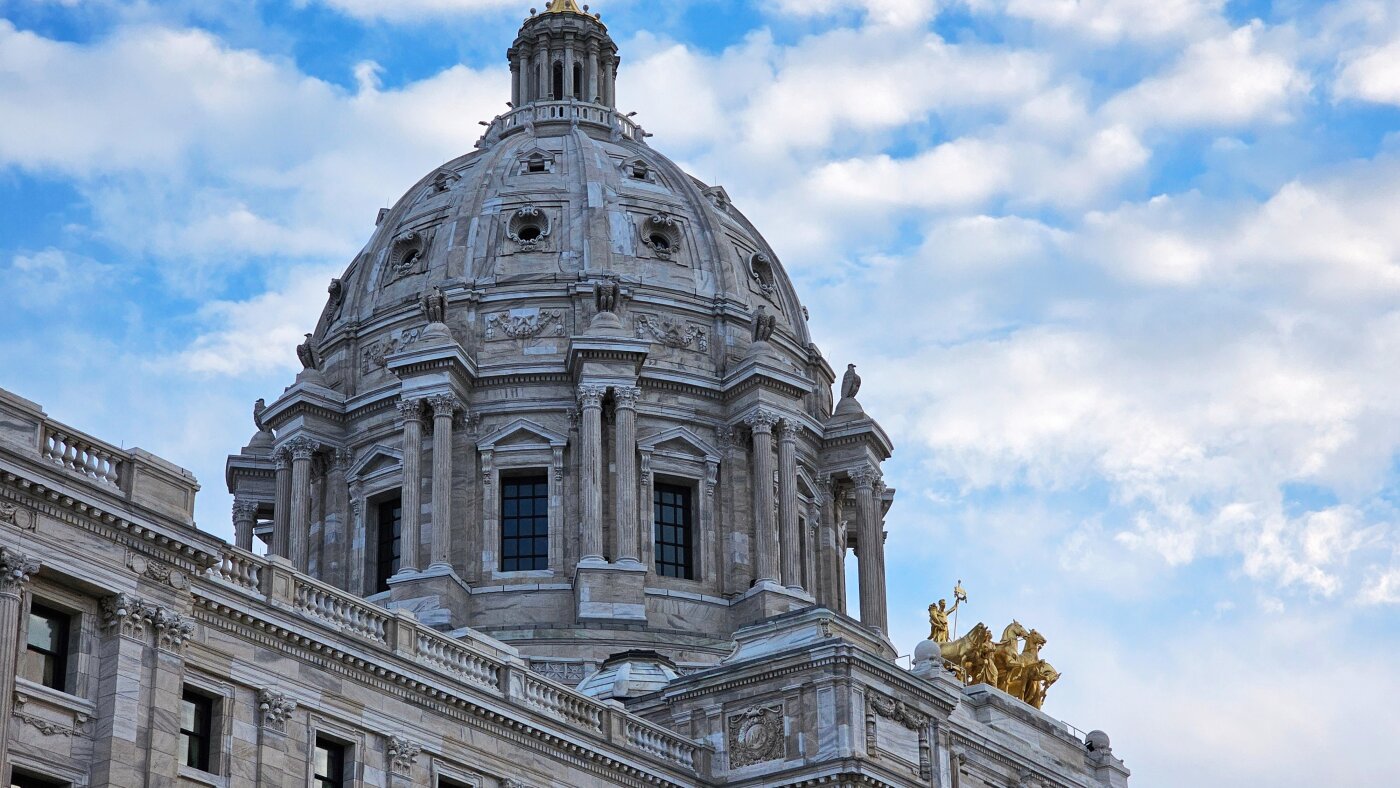
Free membership unlocks daily market opportunities, growth stock alerts, and investment education designed to help investors improve trading performance. Minnesota has become the first state in the U.S. to enact a law criminalizing the operation of prediction markets, making it a felony for companies such as Kalshi and Polymarket to conduct business within its borders. The move marks an escalation in state-level regulatory pressure on the emerging industry, which has faced legal action from dozens of states in recent months.
Live News
Minnesota Becomes First State to Pass Felony Ban on Prediction MarketsInvestor psychology plays a pivotal role in market outcomes. Herd behavior, overconfidence, and loss aversion often drive price swings that deviate from fundamental values. Recognizing these behavioral patterns allows experienced traders to capitalize on mispricings while maintaining a disciplined approach.- First-of-its-kind felony law: Minnesota is the first state to make it a felony to operate a prediction market, elevating enforcement beyond civil penalties used by other states.
- Targeted platforms: The law explicitly mentions platforms like Kalshi and Polymarket, which offer event-based contracts on elections, sports, and economic outcomes.
- Escalating regulatory trend: Dozens of states have taken legal action against prediction markets, but Minnesota's law sets a new precedent for criminal liability.
- Potential industry impact: The felony classification could discourage investment, development, and user participation in Minnesota, and may prompt other states to consider similar legislation.
- Debate over market legitimacy: Proponents of prediction markets argue they provide hedging mechanisms and price discovery, while opponents equate them to unregulated gambling that poses risks to market integrity and consumer protection.
Minnesota Becomes First State to Pass Felony Ban on Prediction MarketsCross-asset correlation analysis often reveals hidden dependencies between markets. For example, fluctuations in oil prices can have a direct impact on energy equities, while currency shifts influence multinational corporate earnings. Professionals leverage these relationships to enhance portfolio resilience and exploit arbitrage opportunities.Quantitative models are powerful tools, yet human oversight remains essential. Algorithms can process vast datasets efficiently, but interpreting anomalies and adjusting for unforeseen events requires professional judgment. Combining automated analytics with expert evaluation ensures more reliable outcomes.Minnesota Becomes First State to Pass Felony Ban on Prediction MarketsMonitoring market liquidity is critical for understanding price stability and transaction costs. Thinly traded assets can exhibit exaggerated volatility, making timing and order placement particularly important. Professional investors assess liquidity alongside volume trends to optimize execution strategies.
Key Highlights
Minnesota Becomes First State to Pass Felony Ban on Prediction MarketsIncorporating sentiment analysis complements traditional technical indicators. Social media trends, news sentiment, and forum discussions provide additional layers of insight into market psychology. When combined with real-time pricing data, these indicators can highlight emerging trends before they manifest in broader markets.Minnesota has taken an unprecedented step against prediction markets by passing legislation that classifies their operation as a felony offense. The law specifically targets companies like Kalshi and Polymarket, which offer contracts on the outcomes of political events, sports, and other real-world occurrences. While dozens of states have pursued legal actions—including cease-and-desist orders or civil lawsuits—Minnesota is the first to impose criminal penalties.
The legislation, which was recently signed into law, makes it a felony offense for any entity to operate a prediction market that offers contracts on elections, sporting events, or other contingent events without proper authorization. Supporters of the bill argued that such markets function as unregulated gambling, potentially undermining election integrity and exposing consumers to financial harm. Critics, however, contend that prediction markets provide valuable data and hedging opportunities.
Industry participants and legal observers note that the felony designation could deter investors and operators from expanding into Minnesota. Companies like Kalshi and Polymarket have not yet commented publicly on the specific legislation. The move follows a broader crackdown by state regulators, with dozens of jurisdictions taking actions ranging from administrative orders to lawsuits, citing concerns over consumer protection and illegal gambling.
Minnesota Becomes First State to Pass Felony Ban on Prediction MarketsMacro trends, such as shifts in interest rates, inflation, and fiscal policy, have profound effects on asset allocation. Professionals emphasize continuous monitoring of these variables to anticipate sector rotations and adjust strategies proactively rather than reactively.Scenario planning is a key component of professional investment strategies. By modeling potential market outcomes under varying economic conditions, investors can prepare contingency plans that safeguard capital and optimize risk-adjusted returns. This approach reduces exposure to unforeseen market shocks.Minnesota Becomes First State to Pass Felony Ban on Prediction MarketsCorrelating futures data with spot market activity provides early signals for potential price movements. Futures markets often incorporate forward-looking expectations, offering actionable insights for equities, commodities, and indices. Experts monitor these signals closely to identify profitable entry points.
Expert Insights
Minnesota Becomes First State to Pass Felony Ban on Prediction MarketsDiversifying information sources enhances decision-making accuracy. Professional investors integrate quantitative metrics, macroeconomic reports, sector analyses, and sentiment indicators to develop a comprehensive understanding of market conditions. This multi-source approach reduces reliance on a single perspective.The Minnesota law signals a potential shift in the regulatory landscape for prediction markets, a sector that has grown in popularity due to its use in forecasting political and economic outcomes. Legal analysts suggest that the felony designation could deter not only operators but also technology providers and payment processors from engaging with the industry in the state.
From an investment perspective, uncertainty surrounding state-level regulation may create headwinds for platforms and related firms. The patchwork of state actions could lead to increased compliance costs and operational complexity. While the federal Commodity Futures Trading Commission (CFTC) has taken its own enforcement actions against some prediction market operators, state-level criminalization adds a new layer of risk.
Market observers note that other states may follow Minnesota's lead, potentially restricting access to event-based contracts for a significant portion of the U.S. population. However, the legal foundation for such laws could face constitutional challenges, particularly regarding free speech and interstate commerce. Investors and participants are advised to monitor state-level developments closely, as the regulatory environment remains fluid and may evolve rapidly in the months ahead.
Minnesota Becomes First State to Pass Felony Ban on Prediction MarketsThe interplay between short-term volatility and long-term trends requires careful evaluation. While day-to-day fluctuations may trigger emotional responses, seasoned professionals focus on underlying trends, aligning tactical trades with strategic portfolio objectives.Timing is often a differentiator between successful and unsuccessful investment outcomes. Professionals emphasize precise entry and exit points based on data-driven analysis, risk-adjusted positioning, and alignment with broader economic cycles, rather than relying on intuition alone.Minnesota Becomes First State to Pass Felony Ban on Prediction MarketsGlobal interconnections necessitate awareness of international events and policy shifts. Developments in one region can propagate through multiple asset classes globally. Recognizing these linkages allows for proactive adjustments and the identification of cross-market opportunities.